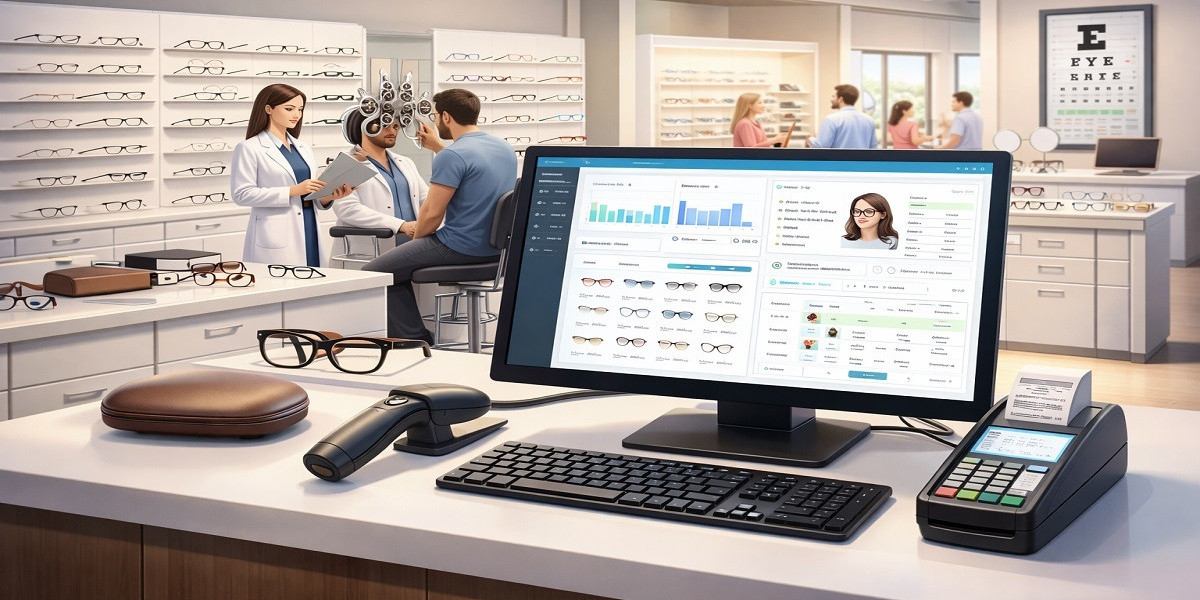

Running an optical store in Saudi Arabia involves much more than selling frames and lenses. Store owners must coordinate customers, prescriptions, inventory, purchases, sales, appointments, payments, and staff activities while maintaining a smooth customer experience. As optical businesses become more digitally focused, برنامج إدارة محلات البصريات can help bring these daily operations together through a centralized and organized system.
For modern optical retailers, برنامج إدارة محلات البصريات provides a practical way to manage information that is often scattered across spreadsheets, paper records, separate billing tools, and manual registers. By connecting important store functions in one platform, optical businesses can reduce unnecessary administrative work and create more consistent workflows throughout the store.
Understanding Modern Optical Store Operations
Optical stores handle several connected processes during a normal business day. A customer may visit for an eye examination, select frames, receive a prescription, choose lenses, place an order, make a payment, and return later to collect the completed eyewear. Each stage requires accurate information.
When these activities are managed separately, employees may spend significant time entering the same information into different systems. This can make everyday work slower and create opportunities for errors.
A centralized optical management solution can connect customer information, prescriptions, product details, sales transactions, and order records. This allows employees to access relevant information without repeatedly searching through physical documents or unrelated software.
How Optical Software Simplifies Daily Work
One of the main advantages of digital optical management is the ability to organize routine tasks. Employees can record customer details, manage products, process sales, and monitor orders through a structured workflow.
Instead of moving between multiple records, staff can work from a connected system. This can make daily responsibilities easier to coordinate, especially during busy periods when several customers require assistance simultaneously.
The result is not simply faster data entry. A well-organized system can create a clearer operating process in which employees know where to find information and how different activities are connected.
Managing Customer Information More Efficiently
Customer information is an important part of optical retail. Stores may need to maintain names, contact details, purchase history, prescription information, and previous orders.
For Saudi optical businesses serving returning customers, organized customer information can also support more personalized service. Employees can review previous purchases and understand the customer's history before beginning a new transaction.
Organizing Prescription Records
Prescription management requires accuracy because eyewear specifications must correspond with the customer's requirements. Optical stores may handle information such as sphere, cylinder, axis, addition, pupillary distance, and other prescription details.
Digital records can provide a structured place for storing these details. Employees can access the appropriate customer record and reduce dependence on handwritten notes.
Improving Frame and Lens Management
Optical stores often carry numerous frame styles, brands, sizes, colors, and lens options. Managing these products manually can become difficult as the product catalog expands.
Digital inventory management can organize products according to relevant attributes. Employees can check available stock, identify products that require replenishment, and review product movement more efficiently.
Supporting Accurate Inventory Control
Inventory is closely connected to profitability in optical retail. Excess stock can tie up capital, while insufficient stock can result in missed sales opportunities.
An optical management system can help store teams monitor stock movement as sales and purchases occur. Instead of relying entirely on periodic manual counting, employees can use digital records to understand inventory levels.
Simplifying Sales and Billing
Sales transactions are another important part of optical store operations. A customer may purchase frames, lenses, accessories, or complete eyewear packages in one transaction.
Digital billing can bring these items together in a single sales process. Employees can select products, apply applicable pricing, record payments, and generate transaction records without maintaining separate handwritten documentation.
Connecting Orders With Customers
Custom eyewear orders require careful coordination. After a customer selects a frame and lens combination, the store may need to send specifications to a laboratory or supplier before the finished product is ready.
A digital order workflow can help employees monitor each order from creation to completion. Staff can record order details, update progress, and review customer information from the same system.
Reducing Manual Administrative Work
Administrative tasks can consume a considerable amount of time in a retail environment. Employees may repeatedly enter customer details, update inventory records, prepare invoices, check orders, and reconcile transactions.
For example, when a sale is recorded, the corresponding inventory information can be updated within the system. This type of integration reduces the need for duplicate entry and can make store operations more consistent.
Supporting Multi-Branch Optical Businesses
Optical companies with multiple branches have additional management requirements. Each location may have different employees, customers, products, and daily transactions while management still needs an overall view of business performance.
A centralized optical management platform can help connect branch-level information. Management can review relevant operational data across locations while individual branches continue handling their daily activities.
Enhancing Employee Productivity
Employees perform better when they can access the information they need without unnecessary administrative obstacles. Complicated processes can increase the amount of time spent searching for records instead of assisting customers.
An organized digital system can provide employees with a clearer workflow. Customer details, product information, prescriptions, orders, and billing records can be accessed through structured screens.
Improving Customer Service in Optical Stores
Customer experience is increasingly important in retail. Optical customers expect convenient service, accurate information, clear pricing, and timely communication.
When customers return to a store, access to previous purchase and prescription information can also make the interaction more efficient. Staff can spend less time collecting basic information and more time understanding what the customer needs.
Supporting Better Business Visibility
Store owners need more than transaction records to understand how their businesses are performing. They may want to examine sales trends, inventory movement, customer activity, and product performance.
Reporting features can transform operational data into useful business information. Managers can review revenue patterns, monitor product movement, and identify areas that may require attention.
Using Reports for Smarter Planning
Reports can be valuable for purchasing, staffing, inventory planning, and sales management. An optical retailer can review which products are selling regularly and which items remain in stock for longer periods.
Sales reports may also help managers understand busy periods and changing customer demand. This information can support future decisions about stock levels and operational resources.
Supporting Secure Business Records
Optical stores handle important customer and business information. Digital systems therefore need appropriate access controls and responsible data management practices.
Role-based access can help ensure employees only access information relevant to their responsibilities. Store owners and managers can maintain greater oversight of sensitive operational records.
Adapting to Saudi Retail Requirements
Saudi Arabia's retail environment continues to become more digitally connected. Businesses are increasingly using technology to improve efficiency, customer service, financial processes, and operational visibility.
For optical retailers in Saudi Arabia, efficient store management depends on accurate information, organized workflows, and responsive customer service. برنامج إدارة محلات البصريات can bring essential optical operations together, helping businesses manage customer records, prescriptions, inventory, sales, orders, billing, and reporting through a more connected approach.
In 2027, digital organization can help optical stores handle growing operational demands without allowing administrative work to dominate daily activities. By selecting software that matches their specific requirements, optical businesses can create smoother internal processes, improve information visibility, and provide customers with a more consistent retail experience.
FAQs
What is برنامج إدارة محلات البصريات?
برنامج إدارة محلات البصريات is optical store management software designed to organize customers, prescriptions, inventory, sales, orders, billing, and reporting.
Can optical software manage prescriptions?
Yes, optical management systems can provide structured digital records for customer prescriptions and related eyewear information.
Does optical software support inventory management?
Yes, optical software can help stores monitor frames, lenses, accessories, stock movement, and replenishment requirements.
Can it help manage multiple optical branches?
Many optical management platforms provide centralized features that can help businesses monitor operations across multiple branches.
Is optical management software useful for growing stores?
Yes, centralized digital management can help growing optical stores organize increasing customer, product, sales, and operational data.