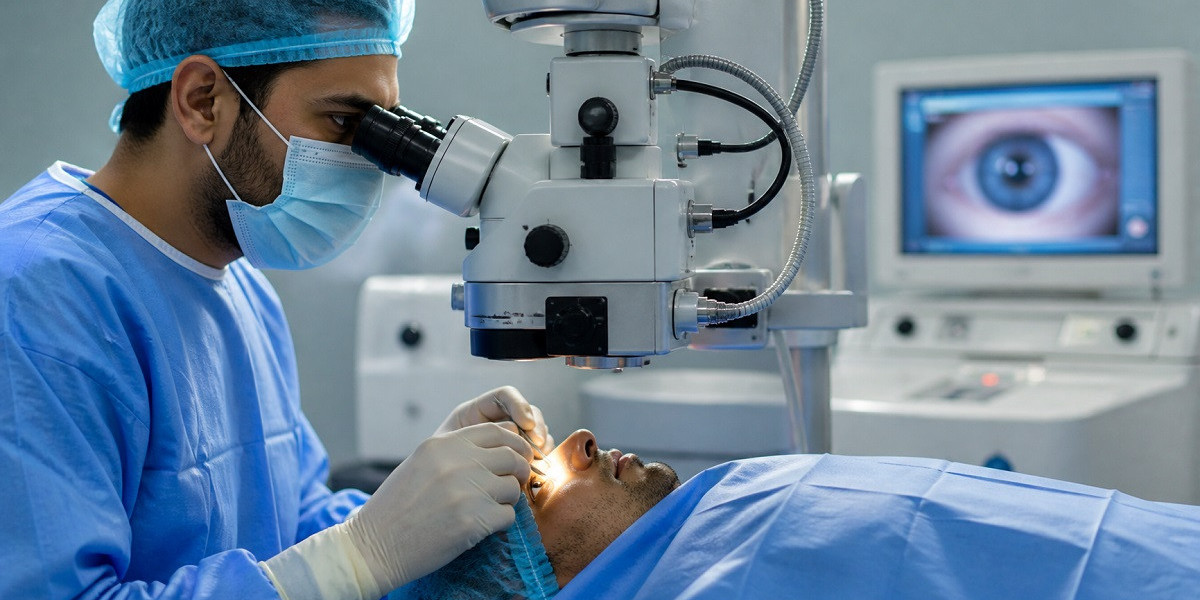

Choosing the Best Doctors For Laser Eye Surgery in Lahore is an important decision for anyone considering vision correction in 2027. Laser eye surgery can reduce dependence on glasses or contact lenses, but the suitability of treatment depends on individual eye health, prescription stability, corneal condition, lifestyle, and realistic expectations. Understanding these factors can help patients approach their consultation with greater confidence.
The Best Doctors For Laser Eye Surgery in Lahore generally focus on detailed assessment before recommending a procedure. Laser vision correction is not simply about using advanced equipment; it involves determining whether a patient's eyes are suitable for treatment and selecting an appropriate procedure. A comprehensive preoperative evaluation can help identify conditions that may affect measurements, healing, or surgical outcomes.
Understanding Laser Eye Surgery
Laser eye surgery refers to a group of procedures designed to correct refractive errors. These errors occur when the eye does not focus light properly on the retina, resulting in blurred vision. LASIK is one of the best-known forms of refractive surgery and is commonly used to treat myopia, hyperopia, and astigmatism.
During LASIK, the cornea is reshaped so that incoming light can focus more accurately on the retina. Depending on the patient's condition, other procedures such as PRK or related laser techniques may also be considered. The appropriate option should be determined after an individual eye examination rather than simply selected according to popularity.
Why the Initial Eye Assessment Matters
A detailed assessment is one of the most important stages of laser vision correction. Before surgery, an ophthalmologist may evaluate the patient's visual prescription, corneal thickness, corneal shape, tear film, eye health, and other factors that can influence treatment.
This means patients should not choose a surgeon solely because of advertising, equipment claims, or the promise of freedom from glasses. The quality of the examination and the doctor's ability to explain the findings are also important parts of the treatment process.
What Makes a Laser Eye Surgery Doctor Suitable
When researching the Best Doctors For Laser Eye Surgery in Lahore, patients should look beyond a simple title or online description. Professional qualifications, experience in refractive surgery, understanding of corneal health, and a commitment to patient evaluation are all relevant considerations.
An experienced surgeon should be able to explain why a particular procedure is being recommended. They should also discuss potential benefits, limitations, possible complications, recovery expectations, and alternative options when appropriate.
Understanding LASIK Candidacy
Not everyone who wears glasses or contact lenses is automatically a candidate for LASIK. According to patient information from the American Academy of Ophthalmology, potential candidates generally need to be adults with a sufficiently stable prescription, suitable corneal health, and realistic expectations. Certain eye conditions and uncontrolled health problems may make LASIK unsuitable or require further evaluation.
Corneal thickness and shape also matter. Conditions such as keratoconus, certain corneal disorders, severe dry eye, or other eye problems may affect whether laser vision correction is appropriate. A proper examination is therefore essential before treatment.
The Importance of Modern Diagnostic Technology
Modern laser eye surgery depends heavily on accurate measurements. Diagnostic technology can help doctors examine the corneal surface and gather information needed for treatment planning.
Corneal mapping and thickness measurements are among the assessments used during LASIK evaluation. These measurements help the surgeon understand the structure of the cornea before deciding whether treatment can safely be performed.
LASIK and Other Laser Procedures
LASIK is only one form of refractive surgery. Another technique, PRK, also uses laser treatment to reshape the cornea but differs in how the surface of the cornea is managed during surgery.
The choice between LASIK, PRK, or another approach depends on individual factors. Corneal characteristics, prescription, lifestyle, eye health, and the surgeon's assessment may all influence the recommendation.
Therefore, patients should avoid choosing a procedure based only on a general comparison found online. The most suitable technique can only be determined after a proper examination.
Discussing Benefits and Expectations
One of the most important conversations with a laser eye surgery doctor involves expectations. The purpose of refractive surgery is to improve vision and reduce dependence on corrective lenses, but perfect unaided vision cannot be guaranteed for every patient.
This is why responsible doctors discuss realistic outcomes rather than making absolute promises. Patients should understand that visual results can vary according to prescription, age, eye health, healing response, and other individual factors.
Clear expectations can also make the recovery period easier because patients understand that visual improvement and stabilization may take time.
Understanding Possible Risks
Although LASIK has an established record of safety and effectiveness, complications can occur. Recent EyeWiki information from the American Academy of Ophthalmology notes that complications are uncommon but can range from temporary problems to more serious adverse events.
A consultation should therefore include a discussion of both benefits and risks. Patients should have enough information to make an informed decision instead of focusing only on the possibility of reducing their dependence on glasses.
Preparing for a Laser Eye Surgery Consultation
Patients can make their consultation more productive by bringing information about their current and previous prescriptions. Details about contact lens use, previous eye procedures, medications, allergies, and known eye conditions may also be useful.
Patients should also discuss their daily visual needs. Someone who spends long hours working on a computer may have different priorities from someone who participates regularly in sports or drives frequently at night. Lifestyle information can help the doctor understand what the patient expects from vision correction.
Questions to Discuss With Your Doctor
A consultation is an opportunity to understand the complete treatment process. Patients can ask why a particular procedure is being recommended, what their diagnostic results show, and whether they have any factors that could affect the outcome.
Discussing these issues before surgery helps patients understand what the procedure involves. A good consultation should provide information rather than pressure the patient into making an immediate decision.
Recovery After Laser Eye Surgery
Recovery varies according to the procedure and the individual patient. LASIK generally provides relatively rapid visual recovery, while surface-based procedures such as PRK may require a longer period for vision to stabilize.
Choosing a laser eye surgery doctor is an important step toward vision correction. LASIK and other refractive procedures can provide meaningful improvements for suitable patients, but treatment should always begin with a detailed examination and an honest discussion of expected results.
Patients researching the Best Doctors For Laser Eye Surgery in Lahore should consider qualifications, experience, diagnostic evaluation, treatment options, communication, safety discussions, and postoperative care. Understanding these factors can help people approach laser vision correction with realistic expectations and make decisions based on their individual eye health.
FAQs
Is laser eye surgery suitable for everyone?
No. Suitability depends on factors such as age, prescription stability, corneal health, eye conditions, and overall health.
Does LASIK permanently remove the need for glasses?
LASIK can reduce dependence on glasses, but some patients may still need glasses for certain activities or as vision changes with age.
How is LASIK different from PRK?
Both procedures reshape the cornea with a laser, but they use different surgical approaches and can have different recovery periods.
Is a detailed eye examination necessary before surgery?
Yes. Preoperative testing helps determine whether laser surgery is appropriate and supports personalized treatment planning.
Can laser eye surgery have complications?
Yes. Although serious complications are uncommon, refractive surgery can have risks and side effects that should be discussed with the surgeon before treatment.