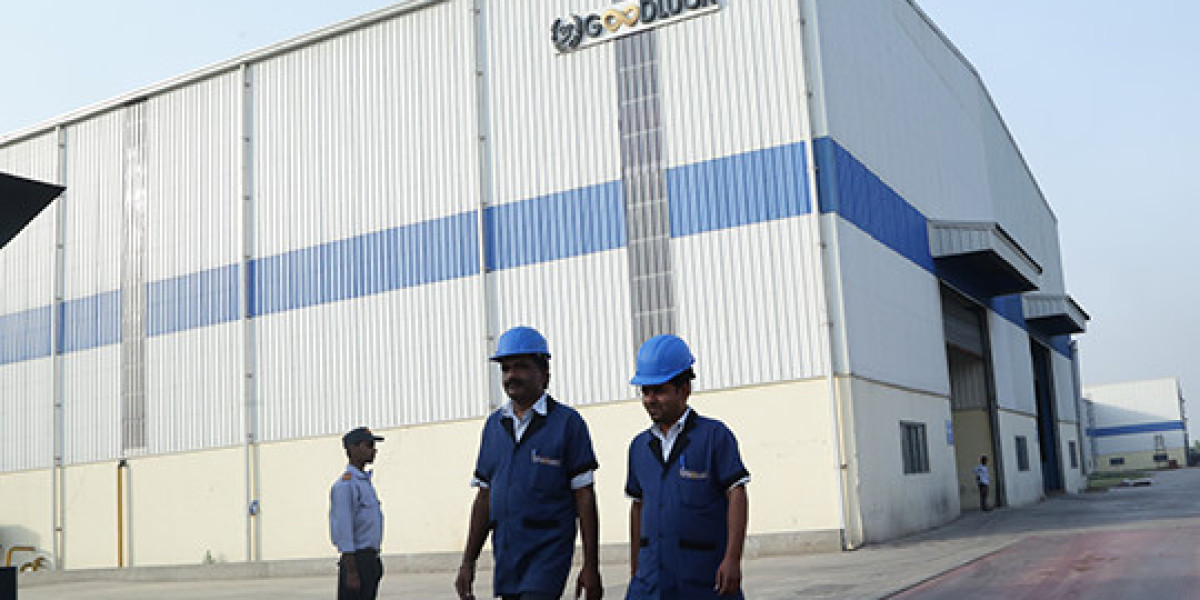

The automotive industry depends on thousands of engineered components working together under demanding conditions. From drivetrain assemblies and structural systems to transmission and chassis applications, individual components must meet defined requirements for material performance, dimensions, durability, and manufacturing consistency. Forging is an important production technology for applications where a strong and reliable metal component is required.
Goodluck India, through GoodLuck Engineering Co., its Forging Division, provides forged components for automotive and other engineering industries. As an automotive forging components supplier, the company combines forging, heat treatment, machining, testing, and inspection capabilities to support customers requiring customized industrial products. Its manufacturing infrastructure includes open-die and closed-die forging facilities, allowing production routes to be selected according to component geometry, material, dimensions, and quantity.
Automotive Components Begin with Engineering Requirements
Before a component enters production, its operating environment needs to be understood. Automotive parts may encounter repeated loads, vibration, impact, temperature changes, friction, and other mechanical conditions. The required material and manufacturing process must therefore correspond with the intended application.
An experienced automotive forging components supplier begins with engineering specifications rather than simply selecting a standard manufacturing process. Drawings, material grades, dimensions, tolerances, heat-treatment requirements, testing procedures, and production volumes can all influence the final manufacturing route.
Goodluck Engineering Co. works with carbon steel, alloy steel, stainless steel, duplex, nickel alloys, titanium, aluminium, Inconel, and other engineering materials. This broad material capability allows customers to discuss different component requirements with a manufacturer equipped for multiple industrial applications.
Why Forging Is Used for Automotive Components
Forging shapes metal through controlled deformation, producing components with characteristics suited to demanding mechanical applications. The process can be used for a wide variety of automotive and industrial parts, depending on their design and material.
The manufacturing route can include open-die forging or closed-die forging. Open-die processes can be appropriate for certain larger or less geometrically constrained products, while closed-die forging can support repeatable component geometries and production quantities.
The selection should be based on the component rather than on a single preferred process. Goodluck India's forging infrastructure provides both manufacturing approaches, giving engineering teams greater flexibility when developing forged products.
Closed-Die Production for Repeatable Components
Modern automotive production often requires components to be manufactured consistently across large quantities. This makes controlled tooling and repeatable forging processes particularly relevant.
As a closed die forging supplier in india, Goodluck Engineering Co. provides closed-die forging capabilities supported by dedicated machinery and customized production infrastructure. Its facility includes closed-die pneumatic machines and a 650-ton closed-die forging press for customized components.
Closed-die forging can help establish repeatable component geometry when suitable dies, material preparation, forging conditions, heat treatment, machining, and inspection are coordinated properly.
For automotive component manufacturers, this integrated process can be valuable when the same forged design needs to be reproduced across multiple production batches.
Material Selection Influences Component Performance
The material selected for an automotive forging must correspond to its functional requirements. Carbon steels and alloy steels are widely used for many engineering applications, while stainless, duplex, nickel-based, titanium, aluminium, and other specialized materials can be considered where specific performance characteristics are required.
Goodluck India works with multiple material families and can manufacture components according to customer-specified grades and technical requirements.
Material verification is also an important stage of production. The forging quality laboratory supports chemical and mechanical testing, allowing material characteristics to be evaluated against specified requirements.
This creates a connection between the material selected at the beginning of production and the component verified at the end.
From Forged Shape to Finished Component
Forging may establish the fundamental component geometry, but many automotive parts require additional machining before they can be integrated into an assembly.
Machining can establish functional surfaces, bores, grooves, threads, mounting features, diameters, and other specified dimensions. The machining strategy must account for the original forged shape and the final component drawing.
Goodluck India's machining infrastructure includes CNC, VMC, and VTL machines, supporting different machining requirements. The company can supply forged products in semi-finished or fully finished conditions depending on customer specifications.
For an automotive forging components supplier, integrating machining with forging can simplify communication between the forging and final-component stages.
The Importance of Heat Treatment
Forging and heat treatment work together to achieve the required material condition. Depending on the material and application, processes can include normalizing, annealing, hardening, tempering, and solution annealing.
The correct treatment depends on the material grade, component design, required mechanical properties, and applicable specifications.
Goodluck India's forging operations include heat-treatment capabilities that allow customers to coordinate this stage with the forging process. This integrated approach helps maintain continuity between material processing and final component requirements.
For automotive applications, heat treatment may be especially important where components must achieve specified hardness, strength, toughness, or other mechanical characteristics.
Forged Bars as a Manufacturing Resource
Not every customer requires a finished automotive component. Some manufacturers require forged material that they can subsequently machine or process within their own facilities.
Forged bars can serve this purpose. They provide a forged starting form that can be converted into shafts, components, or other engineering products according to downstream manufacturing requirements.
Goodluck India's product portfolio includes forged bars alongside flanges, blocks, forged bodies, valve components, tube sheets, and customized forgings.
The availability of forged bars allows customers to choose between sourcing a finished component and purchasing suitable forged material for their own manufacturing processes.
Stub Ends and Collars Beyond Automotive
Goodluck India's forging capabilities extend beyond automotive production. Stubendscollars are part of the broader forged-product portfolio and are relevant to suitable piping and industrial engineering applications.
Stub ends and collars require appropriate material selection, dimensional control, and manufacturing according to applicable specifications. Although their application differs from automotive components, the underlying manufacturing disciplines remain connected through forging, heat treatment, machining, and inspection.
This cross-industry capability allows Goodluck India to support customers from different engineering sectors through a common manufacturing infrastructure.
Inspection Creates Manufacturing Confidence
A forged component must conform not only to its drawing but also to the required material and quality specifications. Inspection and testing therefore form an essential part of the production cycle.
Goodluck India's forging quality laboratory is NABL accredited according to ISO 17025. Its stated testing capabilities include chemical analysis, mechanical testing, impact testing, hardness testing, ultrasonic testing, surface testing, positive material identification, and macro- and microstructure examination.
Dimensional inspection is also supported through specialized measurement equipment.
For an automotive forging components supplier, these capabilities help connect manufacturing output with documented quality requirements.
Supporting OEM and Tiered Supply Chains
Automotive production commonly involves OEMs, component manufacturers, machining companies, assembly operations, and specialized suppliers. Each stage depends on consistent information and product quality from the preceding stage.
A forging supplier can therefore play a significant role in the stability of the wider manufacturing chain. Delays, dimensional inconsistencies, material deviations, or inadequate documentation can create challenges further downstream.
Goodluck India combines several manufacturing stages within its forging division. This allows customers to coordinate forging, heat treatment, machining, testing, and inspection through one manufacturing partner.
Such integration can be useful for procurement teams managing customized components or recurring production programmes.
Customization for Different Component Requirements
Automotive components are rarely identical across manufacturers. Designs may vary according to vehicle architecture, powertrain configuration, load requirements, dimensions, material selection, and manufacturing strategy.
Goodluck Engineering Co. supports customized forging requirements based on customer drawings and specifications. The appropriate manufacturing route can be evaluated according to component size, weight, geometry, material, quantity, machining requirements, and inspection needs.
This approach is different from treating every component as a standard catalogue product. Instead, the manufacturing process can be developed around the customer's engineering requirements.
A Manufacturing Partner Across Multiple Industries
Goodluck India's forging business serves more than automotive customers. Its products and capabilities support aerospace, defence, oil and gas, power generation, marine, chemical processing, mining, infrastructure, and general engineering applications.
This diversified application base means the same manufacturing infrastructure supports different requirements for material selection, forging, heat treatment, machining, and testing.
For an automotive forging components supplier, experience across multiple engineering sectors can provide exposure to different manufacturing challenges while maintaining a common focus on controlled production and inspection.
Goodluck India and the Future of Forged Components
As automotive engineering develops, manufacturers continue to seek components that balance performance, manufacturing efficiency, dimensional accuracy, and production consistency. Forging remains an important manufacturing route for applications where engineered metal components are required.
Goodluck India, through GoodLuck Engineering Co., provides open-die and closed-die forging supported by heat treatment, machining, testing, and inspection. Its product range includes automotive forgings, forged bars, flanges, stubendscollars, and other customized engineered products.
For automotive OEMs, component manufacturers, engineering companies, and procurement teams searching for an automotive forging components supplier, Goodluck India can evaluate requirements based on drawings, material grades, dimensions, applicable standards, production quantities, and inspection requirements.
About Goodluck India
Goodluck India Limited is an engineering and manufacturing company serving customers across automotive, aerospace, defence, energy, infrastructure, oil and gas, and other industrial sectors. Its GoodLuck Engineering Co. Forging Division provides open-die and closed-die forging along with heat treatment, machining, testing, and inspection.
Goodluck India Limited
Good Luck House, II F, 166-167, Nehru Nagar 2, Ambedkar Road, Ghaziabad – 201001, Uttar Pradesh, India
Phone: +91-0120-4196600 / 4196700
Email: goodluck@goodluckindia.com
Website: https://www.goodluckindia.com/
Frequently Asked Questions
What does an automotive forging components supplier manufacture?
An automotive forging components supplier produces forged metal components according to specified material grades, drawings, dimensions, tolerances, and application requirements. Additional services may include heat treatment, machining, testing, and inspection.
Does Goodluck India provide closed-die forging?
Yes. GoodLuck Engineering Co. has closed-die forging equipment, including closed-die pneumatic machines and a 650-ton closed-die forging press for customized components.
What are forged bars used for?
Forged bars can be used as finished engineering products or as starting material for subsequent machining and component manufacturing, depending on the customer's requirements.
What are stubendscollars?
Stubendscollars are specialized forged products associated with suitable piping and industrial engineering applications. Their dimensions and materials depend on the relevant design and technical specifications.
Can Goodluck India supply machined forgings?
Yes. Goodluck India's forging division has an integrated machining facility with CNC, VMC, and VTL equipment and can provide semi-finished or finished forged products according to requirements.