
When comparing laptops, buyers usually focus on the processor, RAM, storage, and graphics. The Wi-Fi chipset receives much less attention, even though it controls one of the laptop's most frequently used features.
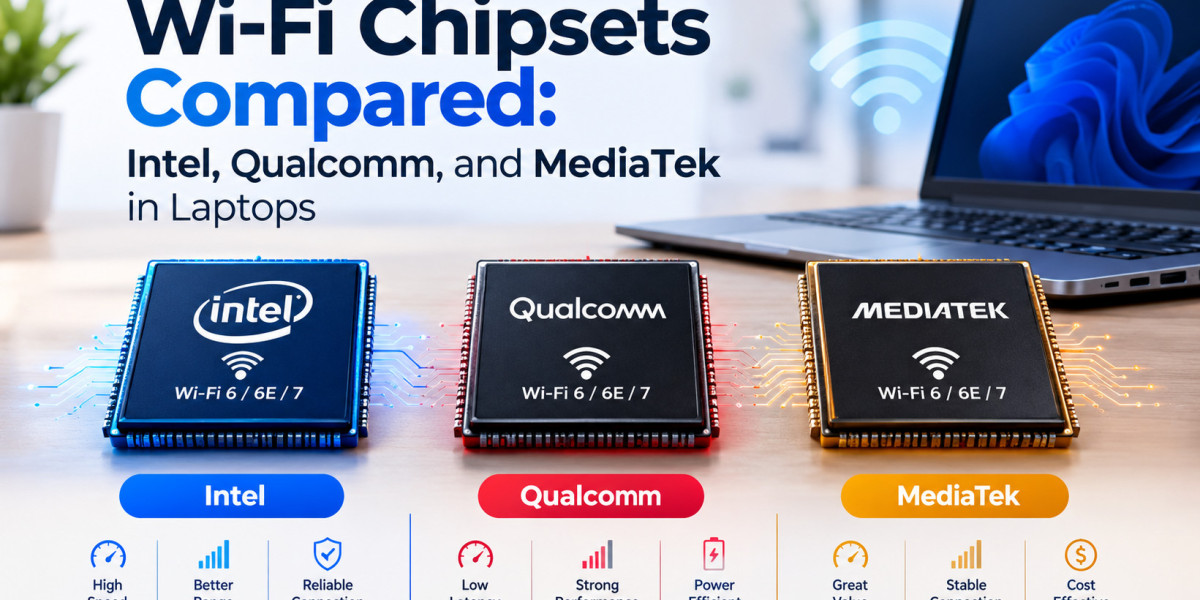
Intel, Qualcomm, and MediaTek are among the major names behind wireless connectivity in modern laptops. Each offers chipsets supporting different Wi-Fi generations, speeds, frequency bands, and features.
Understanding the differences can help buyers choose a laptop that performs reliably at home, in the office, or while travelling.
Laptop WiFi Chipset Explained
A laptop wifi chipset explained simply is the hardware responsible for managing the laptop's wireless network connection.
It communicates with the router through the laptop's antennas and determines which Wi-Fi technologies the device can support.
Depending on the chipset, a laptop may offer Wi-Fi 6, Wi-Fi 6E, or Wi-Fi 7 connectivity. Modern chipsets may also support Bluetooth through the same wireless module.
However, the newest Wi-Fi standard does not automatically guarantee the fastest internet experience. Router capability, network congestion, antenna design, drivers, and internet connection speed also matter.
Intel Wi-Fi Chipsets
Intel wireless adapters are widely found across Windows laptops, particularly business and performance-oriented systems.
They have become a familiar option for manufacturers using Intel processors, although Wi-Fi hardware should still be evaluated separately from the CPU.
Intel offers wireless solutions across multiple Wi-Fi generations, including newer Wi-Fi 6E and Wi-Fi 7 options.
For business users, driver support and compatibility can be particularly important because laptops may remain deployed within an organization for several years.
Intel vs Qualcomm WiFi Laptop Performance
An Intel vs Qualcomm wifi laptop comparison cannot be decided by the manufacturer name alone.
Qualcomm has significant experience in wireless communications and provides connectivity technology across laptops, smartphones, and other devices. Its wireless platforms can be found in both conventional PCs and newer Snapdragon-powered Windows laptops.
Instead of assuming Intel or Qualcomm is automatically faster, buyers should compare the exact wireless chipset used in each laptop.
Check the supported Wi-Fi generation, frequency bands, Bluetooth version, and compatibility with the network equipment you plan to use.
The rest of the laptop design matters as well. A capable wireless chipset paired with poor antenna placement may not deliver its full potential.
How Does MediaTek Compare?
MediaTek wifi laptop performance has become increasingly relevant as the company's wireless solutions appear across a wider range of laptop models.
MediaTek provides chipsets supporting modern Wi-Fi technologies and is used by multiple computer manufacturers.
For everyday activities such as browsing, cloud applications, video meetings, streaming, and downloads, a well-configured MediaTek wireless solution can provide strong performance.
As with Intel and Qualcomm, buyers should focus on the exact chipset rather than judging connectivity solely by the company producing it.
What Is the Best Laptop WiFi Chip?
There is no universal best laptop wifi chip for every user.
A professional working in a busy corporate office may prioritize connection stability and compatibility with enterprise network infrastructure. A gamer may care more about latency, while someone regularly transferring large files over a local network may prioritize maximum wireless speed.
When making a laptop wifi chipset comparison, consider:
- Wi-Fi generation
- Supported frequency bands
- Bluetooth support
- Driver availability
- Router compatibility
- Laptop antenna design
- Intended workload
These factors provide a much more useful picture than the chipset brand alone.
Do You Need Wi-Fi 7?
Wi-Fi 7 is increasingly appearing in newer laptops and can provide significant improvements when used with compatible networking equipment.
However, not every buyer needs to upgrade immediately.
A laptop with well-implemented Wi-Fi 6 or Wi-Fi 6E may still provide excellent performance for office applications, streaming, meetings, and everyday internet use.
Businesses should consider how long they expect laptops to remain deployed. Buying newer wireless technology today may make sense when devices are expected to stay in service for several years.
Check Connectivity Before Buying
When comparing models through a laptops supplier in dubai, buyers should look beyond processor and memory specifications and check the wireless hardware too.
This becomes particularly important for businesses purchasing laptops in bulk. Standardizing on compatible wireless hardware can make network management and troubleshooting easier for IT teams.
For individual buyers, checking the exact Wi-Fi chipset can also help explain why two otherwise similar laptops may provide different wireless experiences.
A Small Component That Makes a Big Difference
Intel, Qualcomm, and MediaTek all offer capable wireless technologies. The better choice depends on the specific chipset, laptop design, network environment, and user's requirements.
A fast processor cannot compensate for unreliable connectivity when most daily work depends on cloud platforms, video meetings, online applications, and shared files.
The Wi-Fi chipset may be a small specification on the product sheet, but for a connected laptop, it can have a major impact on everyday performance.