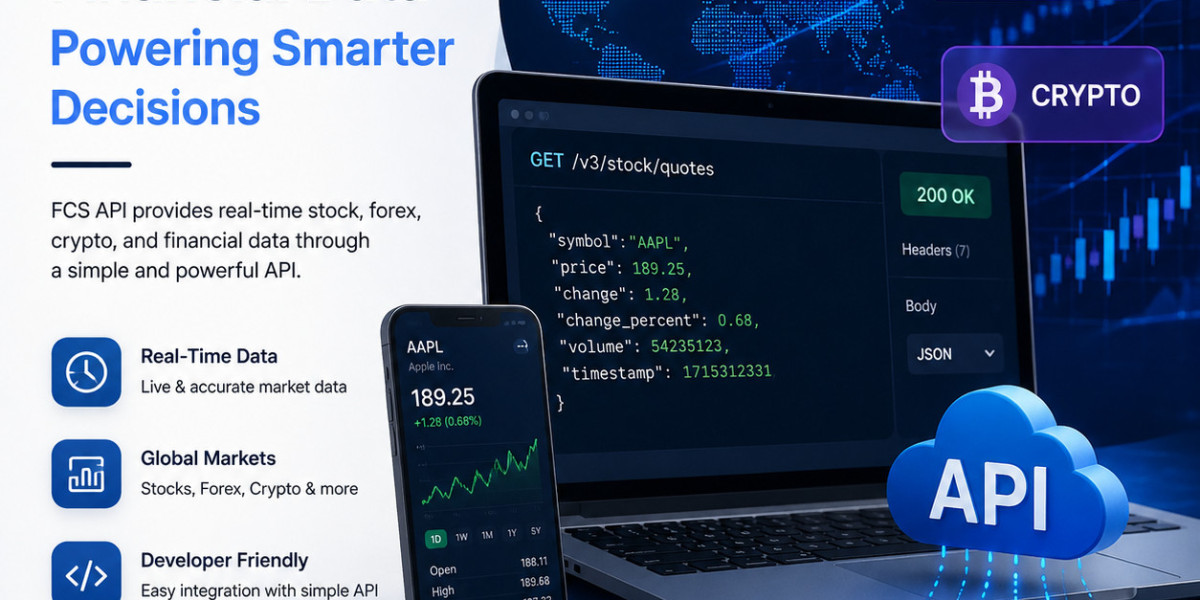

A Crypto API gives websites, applications, trading platforms, and financial tools access to cryptocurrency market data. Instead of collecting prices and market information manually, developers can use an API to connect their products with data from financial markets. This makes it easier to display crypto prices, track market movements, build charts, and create other financial features.
One of the first questions businesses and developers ask before choosing an API is about the Crypto API Cost. The answer is not always the same because different providers offer different plans, features, data coverage, request limits, and levels of service. Some APIs have free plans, while others charge monthly or yearly fees based on usage and features.
Understanding what affects the price can help you choose an API that matches your project without paying for features you do not need.
What Is a Crypto API?
Understanding How a Crypto API Works
A cryptocurrency API is a connection that allows software to access cryptocurrency-related data. Developers can use API requests to retrieve information such as current prices, historical prices, trading pairs, market statistics, and other financial data.
For example, a website may use a Crypto API to show the current Bitcoin price. When a user opens the page, the application can request the latest Bitcoin data through the API and display it on the website.
Crypto APIs can be used for many different purposes. Trading applications can use them to monitor markets, financial websites can use them to display prices and charts, and developers can use them when building cryptocurrency tools and dashboards.
Why Businesses Use Crypto APIs
Building a complete market data system from the beginning can require significant development work. A ready-made API can provide access to financial information without requiring a business to create every part of the data infrastructure itself.
For platforms that work with multiple financial markets, an API can also make it easier to bring different types of data into one application. Platforms such as FCS API provide financial market information covering cryptocurrencies as well as stocks, forex, commodities, ETFs, and indices.
How Much Does a Crypto API Cost?
Free Crypto API Plans
Some providers offer free API plans for developers who need limited access to cryptocurrency data. These plans can be useful for testing, learning, personal projects, or applications with relatively low data requirements.
However, free plans often have restrictions. These may include limits on API requests, available endpoints, supported data, update frequency, or the number of markets that can be accessed.
For someone building a small project, these limitations may not be a major issue. For a commercial application that needs frequent data updates, a paid plan may become more practical.
Paid Crypto API Plans
Paid Crypto API plans usually provide higher usage limits and additional features. The exact Crypto API Cost depends on the provider and the plan selected.
A paid plan may offer more API requests, broader market coverage, faster updates, historical data, additional endpoints, and higher usage limits. Some providers may also offer different plans for individual developers, businesses, and larger applications.
Instead of looking only at the monthly price, it is important to compare what each plan actually provides.
What Factors Affect Crypto API Cost?
API Request Limits
One of the biggest factors affecting Crypto API Cost is the number of requests allowed.
An API request happens when an application asks the API for information. A small website may only need a limited number of requests each day, while a trading application or financial dashboard may need thousands or millions of requests.
Higher request limits generally require a higher plan because the provider has to support greater usage.
Data Coverage
The amount and type of cryptocurrency data available can also affect pricing.
Some APIs may provide basic price information, while others offer broader market data. Depending on the provider, users may be able to access cryptocurrency prices, trading pairs, historical information, market statistics, and other financial data.
If a project needs data from many cryptocurrencies and markets, it is important to check the provider's coverage before choosing a plan.
Real-Time Data
Real-time or frequently updated data can be important for applications that need current market information.
For example, a trading dashboard may need prices to update regularly so users can monitor market movements. A simple educational website may not require the same update frequency.
Because real-time data can require more infrastructure and frequent data processing, access to higher-frequency data may be included only in certain pricing plans.
Historical Market Data
Historical data is another factor to consider when comparing Crypto API Cost.
Developers may need historical prices to create charts, study previous market movements, test strategies, or build analytical tools. Not every API plan provides the same level of historical data.
Before purchasing a plan, check how much historical information is available and whether it is included in the subscription.
Number of Supported Endpoints
An endpoint provides access to a particular type of information or function.
A basic plan may provide access to common price endpoints, while more advanced plans may provide additional market data and analytical endpoints.
If your application only needs current prices, you may not need a plan with a large number of advanced endpoints.
Why Free and Paid Crypto APIs Differ
Free APIs Can Be Useful for Testing
A free API can be a practical starting point for developers. It allows them to test an application and understand how API integration works before committing to a paid service.
For example, a developer creating a cryptocurrency dashboard can first test whether the API provides the data required by the application. If the project grows, the developer can then consider a plan with higher limits.
Paid APIs Can Support Growing Applications
As an application receives more users, its data requirements can increase. A project that works well with a small number of API requests may eventually need a higher request limit.
Paid plans can provide additional capacity and features that are useful for commercial applications. The right plan depends on the project's actual requirements rather than simply choosing the most expensive option.
How to Choose a Crypto API Based on Cost
Calculate Your Data Requirements
Before comparing prices, determine how much data your project needs.
Think about how frequently your application will request information, how many users it has, which cryptocurrencies it needs, and whether it requires real-time or historical data.
Having these details makes it easier to compare plans accurately.
Compare Features Instead of Price Alone
The cheapest API is not necessarily the most suitable option, and the most expensive API may provide features that your project does not need.
Compare request limits, data coverage, update frequency, historical data, supported endpoints, documentation, and other features alongside the monthly price.
This gives you a clearer picture of the actual value of each plan.
Check API Documentation
Good documentation can make API integration much easier.
Before choosing a provider, developers should review the documentation and check whether it explains authentication, endpoints, request parameters, responses, limits, and examples clearly.
Easy-to-understand documentation can reduce development time and make it easier to troubleshoot problems.
Is a More Expensive Crypto API Always Better?
Match the Plan to Your Project
A higher-priced API is not automatically the right choice. A small website may only need basic cryptocurrency price data, while a large financial platform may need extensive market coverage and higher request limits.
The best approach is to identify your requirements first and then select a plan that provides the necessary features.
Consider Future Growth
It is also useful to think about future requirements. If your application is expected to grow, you may eventually need more requests, additional market coverage, or more advanced data.
Choosing a provider with different pricing levels can make it easier to upgrade as your project develops.
Understanding the Total Crypto API Cost
Monthly Subscription Is Not the Only Consideration
When calculating Crypto API Cost, consider more than the advertised subscription price.
Development time, API integration, request limits, data requirements, and future upgrades can all affect the overall cost of using a cryptocurrency API.
A plan that appears inexpensive may become less suitable if it has strict request limits. On the other hand, paying for a large plan when you only need basic data can also increase unnecessary expenses.
Look at Long-Term Requirements
Your API requirements may change as your website, application, or business grows. For this reason, it is useful to consider both current and expected usage.
A provider that supports multiple financial markets can also be useful for projects that may expand beyond cryptocurrencies. FCS API, for example, provides financial data across cryptocurrencies, stocks, forex, commodities, ETFs, and indices, along with charts, market information, and other financial resources.
Final Thoughts on Crypto API Cost
The Crypto API Cost depends on several factors, including API request limits, data coverage, update frequency, historical data, available endpoints, and the features included in each plan. Free plans can work well for testing and smaller projects, while paid plans may be more suitable for applications that need greater usage limits and broader market data.
Before selecting an API, identify exactly what your project needs. Compare pricing plans based on the data, request limits, features, and support they provide rather than looking at the price alone. A suitable cryptocurrency API should provide the market information your application needs while fitting your expected usage and budget.
For developers and businesses working with financial data, platforms such as FCS API can provide access to cryptocurrency and other global market information through financial APIs, helping applications track prices, market trends, and financial data in one place.